Sciatica affects nearly 40% of people during their lifetime, causing sharp pain that radiates from the lower back through the hips, buttocks, and down the legs. For New York City residents managing this painful condition, mobile massage NYC delivers professional, licensed clinical relief directly to your residence or hotel room without the physical stress of traveling to a spa while experiencing acute discomfort.
Understanding Sciatica and How Home Massage Therapy Helps
Home massage therapy relieves sciatica pain by reducing hypertonic muscle tension, increasing regional blood flow, and decompressing the impinged sciatic nerve. Receiving therapeutic care in your own living space eliminates transit-related spinal loading and allows immediate restorative rest.
What Causes Sciatica Pain?
Sciatica pain develops when the sciatic nerve—the thickest single nerve in the human body, spanning spinal roots L4 through S3—becomes irritated, compressed, or inflamed. As it passes through the greater sciatic notch into the pelvis and down each lower extremity, surrounding tissues can exert abnormal mechanical pressure on its pathway.
Common causes include lumbar disc herniations pressing on spinal nerve roots, piriformis muscle spasms, degenerative disc disease, pregnancy-related postural changes, and prolonged seated posture common among New York City desk workers. These mechanical stressors trigger shooting pain, burning sensations, numbness, tingling, and localized muscle weakness along the nerve pathway.
Decompressing the Sciatic Nerve through Massage
Massage therapy decompresses the sciatic nerve by softening hypertonic muscles and releasing fascial adhesions that constrict the nerve trunk. Targeted soft-tissue manipulation restores functional muscle elasticity, decreases localized tissue edema, and encourages endorphin release to naturally modulate pain signaling.
Clinical literature from the American Massage Therapy Association indicates that therapeutic massage significantly alleviates lower back discomfort and enhances functional joint mobility. Releasing tension across the pelvic rotators restores healthy muscle fiber length, improves arterial perfusion, and enables compressed nerve pathways to recover without ongoing mechanical friction.
Why Mobile Massage is Superior for Sciatica Sufferers
Mobile massage therapy eliminates transit-induced discomfort caused by sitting on subway benches, standing on crowded train platforms, or navigating congested Manhattan traffic. Commuting while experiencing nerve impingement contracts spinal musculature and frequently worsens lumbar nerve irritation.
HomeMassage brings Licensed Massage Therapists (LMTs) directly to your apartment, hotel room, or corporate office across all 5 boroughs. Remaining in a comfortable, familiar setting lowers stress hormones, prevents defensive muscular guarding, and allows you to rest immediately following therapy without navigating urban transit.
Best Massage Techniques for Sciatica Pain Relief used by HomeMassage
HomeMassage utilizes targeted therapeutic modalities matched to the physiological source of your sciatic nerve impingement. Every session applies personalized pressure guided by the HomeMassage 1–5 pressure scale to ensure therapeutic efficacy within your comfortable tolerance.
Deep Tissue Massage Service to Target Muscle Tension
Premier Deep Tissue Massage Service targets deep muscular layers and dense fascia using slow, deliberate longitudinal strokes and sustained cross-fiber friction. Operating at levels 4 to 5 on the HomeMassage pressure scale, this modality releases stubborn muscular contractions compressing the sciatic pathway.
Experienced therapists focus on chronic adhesions within the piriformis, gluteus medius, and quadratus lumborum muscles. Applying focused pressure functions as a precise massage for knots, breaking down restrictive cross-links in connective tissue, restoring tissue flexibility, and creating spatial clearance around irritated neural pathways.
Myofascial Release for Piriformis Syndrome
Myofascial release for piriformis syndrome elongates restricted fascial sheaths surrounding the deep lateral rotators of the hip. In approximately 15% to 20% of individuals, the sciatic nerve penetrates directly through the piriformis muscle belly, creating elevated susceptibility to muscular entrapment.
Therapists apply gentle, sustained tensile pressure without lubricant for 90 to 120 seconds into myofascial barriers. This technique reorganizes collagen fibers, restores tissue pliability, and relieves pressure along the sciatic nerve as it exits the pelvic basin.
Neuromuscular Therapy and Trigger Point Release
Neuromuscular therapy deactivates hyper-irritable trigger points within taut muscular bands that refer radicular pain along neural paths. Trigger points located within the gluteus minimus, piriformis, and hamstring groups frequently mimic true spinal disc herniation symptoms.
Licensed therapists apply static ischemic compression to identified trigger points for 30 to 60 seconds. Following point deactivation, gentle passive lengthening restores normal resting sarcomere length, resolving referred sensations and easing shooting nerve pain down the leg.
Swedish Massage Service for Improved Circulation
Professional Swedish Massage Service utilizes 5 foundational strokes—effleurage, petrissage, friction, tapotement, and vibration—to stimulate blood circulation and enhance venous return. Calibrated at levels 2 to 3 on the HomeMassage pressure scale, this technique provides soothing relief during acute flare-ups when aggressive pressure is contraindicated.
Flowing, rhythmic strokes accelerate lymphatic drainage, lower local inflammatory markers, and calm an oversensitized central nervous system. Similar to the gentle approach of arthritis relief massage, Swedish therapy promotes tissue oxygenation and helps quiet pain signaling across hyper-reactive nerve endings.
Integrating Sports Massage Service for Active Recovery
Sports Massage Service restores biomechanical balance, relieves posterior chain restriction, and improves mobility for active individuals experiencing exercise-induced sciatica. Operating across levels 3 to 5 on the pressure scale, this modality incorporates deep muscle stripping, passive stretching, and joint mobilization.
Therapists address tight hip rotators and gluteal fatigue resulting from distance running, cycling, or weight training. Choosing specialized sports massage nyc accelerates athletic muscular recovery, corrects compensatory gait habits, and prevents repetitive stress from aggravating sciatic nerve roots.
Key Areas Targeted During Your Session
Clinical massage therapy for sciatica addresses specific anatomical cross-sections along the lower kinetic chain to relieve nerve compression. Therapists assess postural alignment, pelvic symmetry, and tissue density to target the primary sources of impingement.
Palpation of the Piriformis and Gluteal Muscles
Palpation of the piriformis and gluteal complex identifies muscle hypertonicity and focal trigger points lying beneath the gluteus maximus. Therapists carefully locate the external hip rotators between the greater trochanter and the sacrum.
Manual evaluation reveals muscle imbalances, tissue tautness, and precise sites of nerve impingement near the sciatic notch. Graded, deliberate compression releases these contracted deep rotators while protecting client comfort throughout the session.
Releasing Tension in the Hamstrings and Lower Back
Releasing tension in the hamstrings and lumbar paraspinals relieves downward pelvic tilt and restores healthy lumbar lordosis. Shortened biceps femoris, semitendinosus, and semimembranosus muscles pull downward on the pelvis, flattening the lumbar spine and increasing mechanical stress on lower nerve roots.
Therapists work across the lumbar erector spinae, multifidus, and quadratus lumborum muscles alongside thorough hamstring releases. Applying targeted massage for lower back pain eases compressive force across lumbar vertebrae and reduces pulling tension along the sciatic path.
Addressing the Sacrum and Hip Mobility
Addressing the sacroiliac (SI) joint and hip capsule restores healthy pelvic articulation and balanced weight transmission. Sacroiliac joint stiffness or pelvic torsion often inflames adjacent lumbosacral nerve roots, intensifying sciatic symptoms.
Therapists utilize gentle joint mobilization, sacral balancing, and targeted myofascial work on the sacrotuberous ligament. Improving hip internal and external rotation eliminates compensatory pelvic torque and promotes lasting postural ease.

What to Expect From a HomeMassage Service in New York City
HomeMassage provides a streamlined in-home therapeutic experience across New York City. Your Licensed Massage Therapist (LMT)—credentialed by the New York State Education Department (NYSED) with a minimum of 2 years of professional experience and $2,000,000 in professional liability insurance—brings a 76 cm (30-inch) portable table, fresh linens sanitized at 60°C (140°F), and unscented, nut-free massage oils.
Setup requires 10 to 15 minutes and never deducts from your hands-on therapy time. Sessions begin with a health intake to evaluate nerve pain patterns, followed by customized hands-on therapy utilizing the HomeMassage 1–5 pressure scale and 10 to 15 minutes of post-session self-care guidance and pack-down.
Complementary Therapies and Considerations
Complementary in-home massage options address distinct physical mobility levels, shared living arrangements, and maternal wellness needs. Matching treatment styles to individual client requirements ensures safe and effective care.
When to Choose Prenatal Massage Service for Sciatica
Professional Prenatal Massage Service offers gentle, supportive pain relief for expectant mothers experiencing sciatica starting from week 13 (second trimester). Postural shifts, hormonal ligament relaxation, and anterior pelvic tilt place significant mechanical tension on the sciatic nerve and sacroiliac joints.
Specialized prenatal LMTs utilize side-lying positioning with supportive cushioning to protect maternal and fetal circulation. Modulating pressure across levels 1 to 3 relieves lumbar tension, eases hip ache, and calms nerve irritation without pharmaceutical intervention.
The Benefits of Couples Massage Service for Shared Relief
Professional In-Home Couples Massage Service allows 2 individuals to experience simultaneous restorative therapy within a shared living space. Two dedicated therapists bring 2 tables into a space measuring approximately 3.7 m × 3.4 m (12 ft × 11 ft), starting and concluding treatments concurrently.
Each client selects their preferred modality and pressure level independently, pairing targeted deep tissue work with restorative Swedish strokes. A shared session reduces systemic stress markers, enhances oxytocin levels, and supports collective relaxation without requiring post-massage travel.
Chair Massage Service Options for Limited Mobility
Premier Chair Massage Service provides an accessible option for individuals experiencing severe acute sciatica who find reclining on a traditional massage table uncomfortable. Using an ergonomic 9 kg (20-lb) massage chair, clients remain fully clothed without oils in an area of 2 m × 2 m (6.5 ft × 6.5 ft).
Therapists focus on upper kinetic tension, neck stiffness, and shoulder adaptations caused by antalgic sciatica postures. Delivered at levels 2 to 4 on the pressure scale, seated sessions relieve compensatory upper-body strain efficiently.
Self-Care and Maintenance Between Appointments
Consistent self-care routines help sustain tissue pliability and prolong the neuromuscular relief achieved during your in-home appointments. Gentle stretching and targeted self-release prevent re-tightening of pelvic stabilizers.
Simple Stretches for Immediate Relief
Targeted daily stretches gently decompress the lumbar spine and elongate hypertonic external hip rotators without overstretching the sciatic nerve:
- Piriformis stretch: Lie supine on a supportive mat, cross the affected leg over the opposite knee, grasp the uninjured thigh with both hands, and gently pull toward your chest for 30 seconds across 3 repetitions.
- Figure-four stretch: While seated upright in a chair or lying on your back, place the ankle over the opposite knee, keep your spine tall, and lean gently forward until feeling a release in the outer hip for 30 seconds.
- Knee-to-chest stretch: Lie flat on your back, draw one knee upward toward your torso while keeping the opposite leg relaxed, and hold for 30 seconds to open the lumbar intervertebral space.
Using Tennis Balls for Self-Massage
Self-massage with a tennis ball applies direct ischemic compression to stubborn myofascial trigger points in the gluteal muscles. Place the tennis ball beneath the lateral gluteals while seated on the floor or leaning against a smooth wall to control body weight distribution.
Maintain steady, tolerable pressure on tender muscle spots for 30 to 60 seconds until the nodule softens. Avoid placing the ball directly against the lumbar spine, sacrum, or over the inflamed nerve pathway.
Post-Massage Hydration and Rest
Drinking water following your massage session supports cellular rehydration and metabolic waste elimination from treated muscular tissues. Drink an extra 500 ml (17 fl oz) of water throughout the remainder of the day beyond your usual intake.
Engage in light walking to encourage circulation while avoiding vigorous workouts, heavy resistance training, and prolonged static sitting for 24 hours following deep tissue work to let tissues adjust and recover.
How Often Should You Book a Mobile Massage for Sciatica?
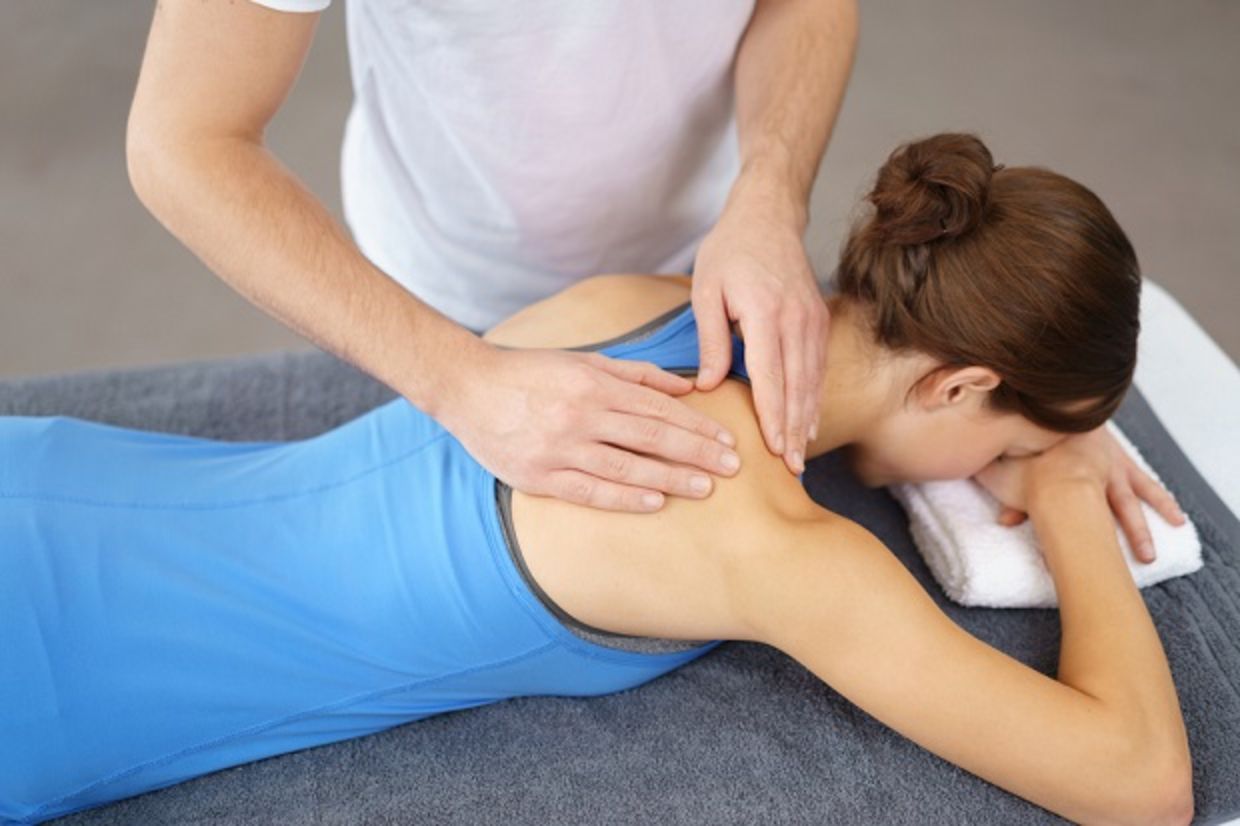
Optimal treatment frequency depends on whether your condition presents as acute inflammation or chronic nerve compression. For acute flare-ups, appointments scheduled every 3 to 4 days during the initial 2 weeks help deactivate spasms and restore basic mobility.
Chronic sciatica generally responds best to weekly 60-minute or 90-minute sessions for 4 to 6 weeks, followed by maintenance visits every 2 to 3 weeks. Clients often ask is sports massage for everyone when planning preventative care; both athletes and sedentary office workers benefit from ongoing soft-tissue maintenance that addresses muscular imbalances before nerve impingement recurs.
Book Your Sciatica Relief Session with HomeMassage Today
Experience licensed, clinical sciatica relief in your NYC residence, hotel room, or office. HomeMassage provides 100% mobile services delivered by NYSED-licensed massage therapists across Manhattan, Brooklyn, Queens, The Bronx, and Staten Island ($30 travel surcharge applies for Staten Island).
Appointments are available 7 days a week from 07:00 to 21:00, with same-day booking available for acute pain needs. Reserve your session at homemassagenyc.com or call our dispatch team at +1 (917) 426-9100. HomeMassage is located at 106 W 32nd St, New York, NY 10001, USA, serving as a dispatch and training facility bringing therapeutic excellence directly to your door.