Choosing between seated bodywork and full-body table treatments directly shapes your in-home recovery and relaxation. HomeMassage provides both modalities throughout New York City, delivering customized in-home massage NYC sessions directly to your residence, hotel, or private office.
Seated and table therapies differ fundamentally in client positioning, equipment requirements, manual techniques, session duration, and therapeutic outcomes. Understanding these distinctions ensures you select the optimal modality for your personal schedule, physical space, and recovery goals.
The Core Differences Between Chair Massage and Table Massage
Chair massage and table massage differ fundamentally in body positioning, equipment design, client attire, and primary therapeutic objectives. While seated massage targets acute upper-body strain in an upright posture, table bodywork enables comprehensive, full-body musculoskeletal rehabilitation in a horizontal position.
Differences in Equipment and Positioning
Equipment design and client positioning determine how a therapist accesses muscle tissue during seated and table sessions. Seated bodywork utilizes a specialized ergonomic massage chair weighing approximately 9 kg (20 lb), supporting your chest, face, arms, and legs in a comfortable, forward-leaning posture that decompresses the spine.
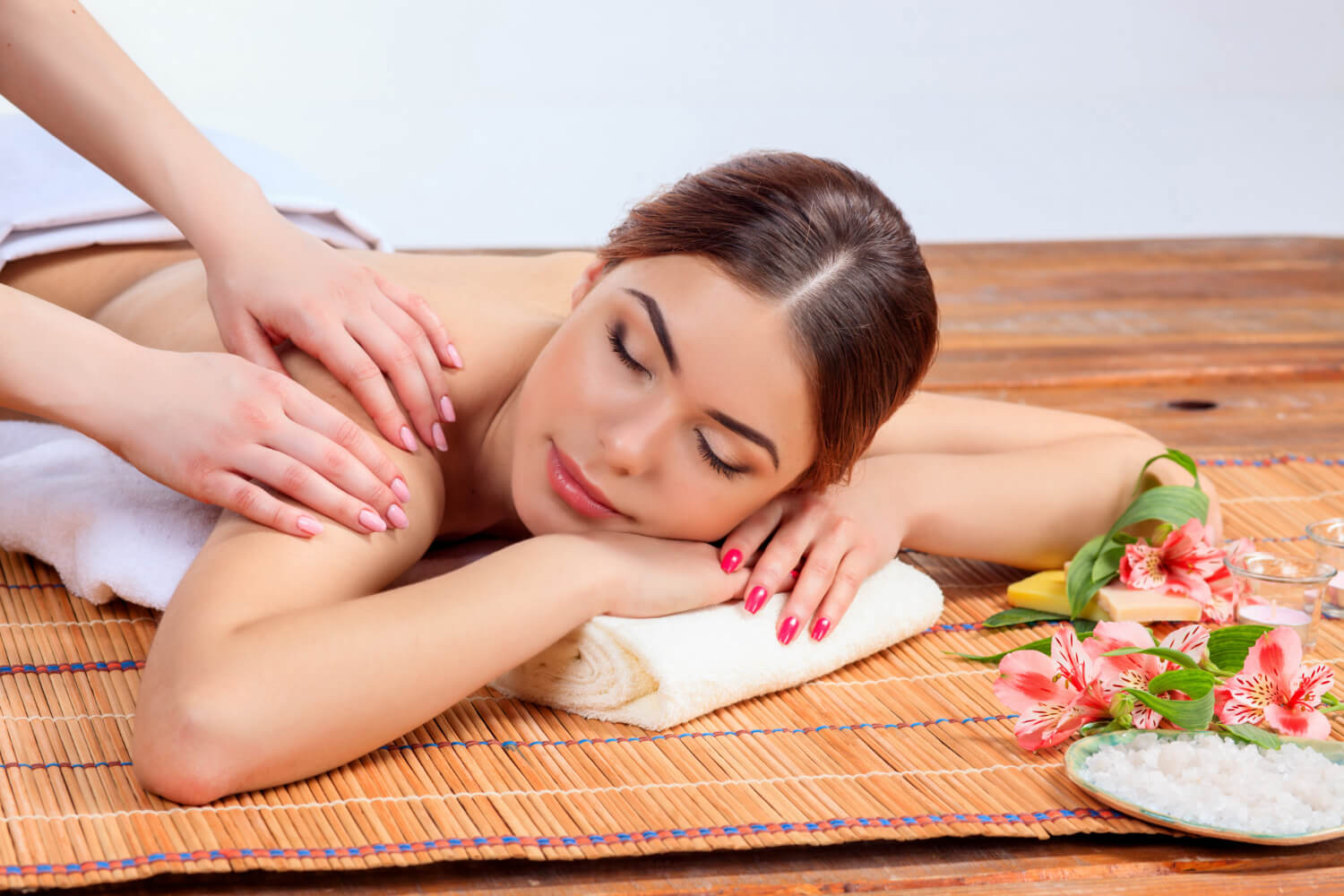
Table therapy requires a professional portable massage table measuring 76 cm (30 inches) wide by 185 cm (73 inches) long with an adjustable face cradle. This horizontal surface allows prone (face-down), supine (face-up), and side-lying positioning, giving the therapist unrestricted access to all major muscle groups.
Techniques Used: Acupressure vs Gliding Strokes
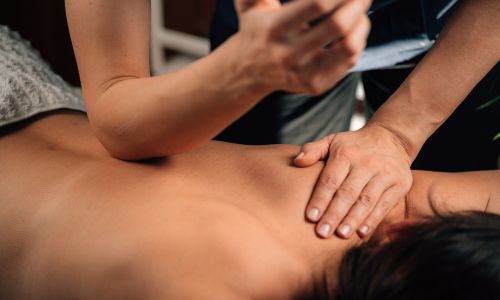
Seated massage prioritizes targeted compression and acupressure, whereas table massage incorporates long, flowing strokes and multi-layer tissue mobilization. During chair sessions, therapists apply thumb, palm, and forearm pressure to specific acupressure points along the spine, cervical region, and shoulder girdle to relieve acute tension patterns.
Table sessions incorporate classical Western strokes—including effleurage, petrissage, and transverse friction—alongside deep myofascial release. The horizontal surface provides leverage for sustained biomechanical force and continuous gliding movements across extended kinetic chains.
Clothing, Oils, and Privacy Considerations
Client attire and skin lubrication distinguish chair treatments from table sessions. Chair massage requires no disrobing, allowing clients to remain fully clothed in professional, casual, or athletic attire without any massage lotions or oils.
Table treatments involve undressing to your personal comfort level beneath fresh, professionally sanitized sheets using strict draping protocols. Therapists apply hypoallergenic, nut-free, and unscented massage oils to nourish the skin and facilitate smooth, friction-free gliding across muscle fibers.
What is Table Massage? A Deep Dive into HomeMassage Services
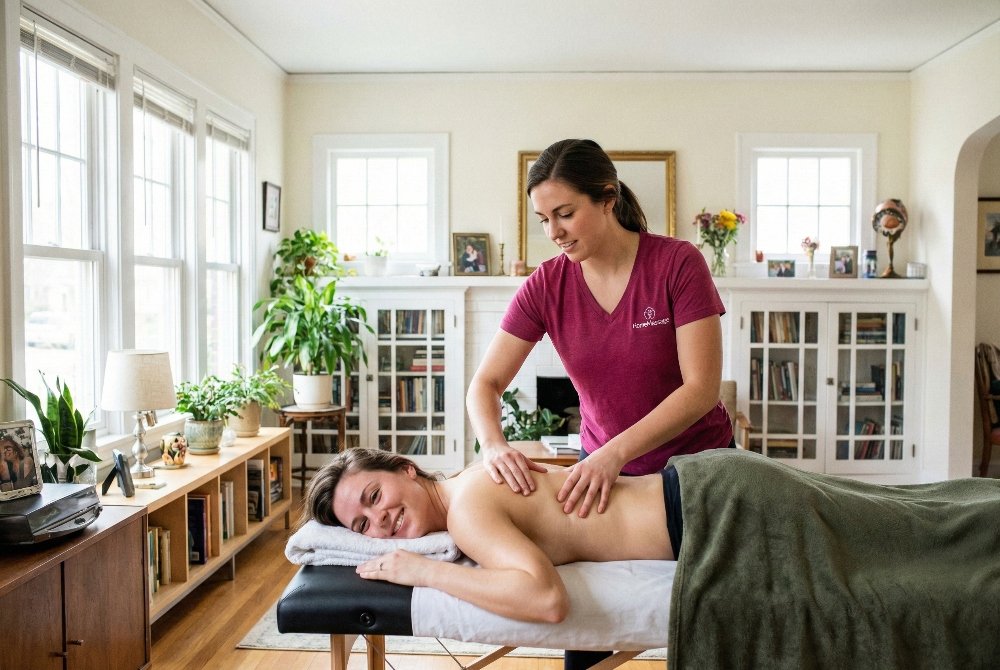
Table massage represents the traditional standard for comprehensive, therapeutic bodywork. HomeMassage brings professional portable tables, sanitized linens, and specialized supplies directly to your residence, simplifying your choice between home massage vs spa visits by eliminating city transit and post-session travel stress.
The Experience of Full Body Therapy
Full-body table sessions deliver systematic musculoskeletal care lasting 60, 90, or 120 minutes of actual hands-on treatment time. Lying horizontally triggers the parasympathetic nervous system, lowering systemic heart rate and promoting deep muscular release across the entire body.
The stable table surface enables Licensed Massage Therapists (LMTs) to employ proper body mechanics and gravity-assisted leverage. This approach allows deeper, safer pressure application while systematically addressing postural imbalances, joint restrictions, and tension points.
Ideal Regarding Deep Tissue and Swedish Services
Table bodywork provides the essential foundation for both Swedish relaxation and clinical deep tissue rehabilitation. HomeMassage delivers Premier Deep Tissue Massage Service using firm pressure (levels 4–5 on a 1–5 scale) to release chronic adhesions, trigger points, and tight postural muscles like the trapezius, erector spinae, and piriformis.
Professional Swedish Massage Service utilizes light-to-moderate pressure (levels 2–3 on a 1–5 scale) to enhance peripheral circulation and reduce stress hormones through 5 fundamental strokes:
- Effleurage (continuous gliding strokes toward the heart)
- Petrissage (rhythmic lifting, rolling, and kneading)
- Friction (deep, circular transverse pressure)
- Tapotement (brisk, rhythmic percussive tapping)
- Vibration (oscillating, shaking movements)
Swedish massage can significantly decrease circulating stress hormones. A clinical study by Rapaport et al. at Cedars-Sinai Medical Center, published in 2010 in the Journal of Alternative and Complementary Medicine, demonstrated that a single 45-minute Swedish massage session significantly reduces cortisol and arginine vasopressin levels while increasing immune lymphocytes in healthy adults.
Perfect To Support Sports and Couples Service
Athletic recovery and shared partner wellness require the expansive access provided by treatment tables. Sports Massage Service combines active stretching, proprioceptive neuromuscular facilitation (PNF), and targeted trigger point therapy on tables to reduce delayed-onset muscle soreness (DOMS) and restore range of motion in runners, cyclists, and athletes.
Professional In-Home Couples Massage Service utilizes 2 portable tables arranged side-by-side with 2 dedicated LMTs working simultaneously. This synchronized format creates a private, shared wellness experience for anniversaries, birthdays, or weekend relaxation without leaving your home.

What is Chair Massage? A Convenient Option Suiting Busy Schedules
Chair massage provides time-efficient, focused therapeutic care designed specifically for busy professionals, corporate environments, and individuals needing rapid upper-body relief. HomeMassage delivers mobile chair massage nyc services directly to corporate offices, residential buildings, and private events throughout New York City.
The Seated Experience and Focus Areas
Seated therapy concentrates specifically on primary stress-bearing regions: the cervical spine, shoulders, upper back, lower back, arms, and hands. Sessions typically last 10, 15, or 20 minutes per person, allowing 1 LMT to treat 3 to 5 individuals per hour.
The ergonomic chair tilts your torso forward to support your sternum and head, removing gravitational load from your cervical vertebrae. Therapists apply targeted compression and petrissage to release tight upper trapezius, rhomboid, and levator scapulae muscles commonly aggravated by desk work.
Space Requirements Regarding Seated Therapy in NYC Homes
Seated massage requires an operating footprint of only 2 m × 2 m (6.5 ft × 6.5 ft) per chair. This minimal footprint fits easily into compact NYC studio apartments, home offices, and corporate conference rooms.
The lightweight chair unfolds within 5 minutes and requires no furniture rearrangement or specialized room setup. By contrast, a single massage table requires 2.4 m × 3.4 m (8 ft × 11 ft), while a couples dual-table setup requires 3.7 m × 3.4 m (12 ft × 11 ft).
Suitability To Corporate Events and Quick Relief
Corporate wellness programs and corporate meetings benefit directly from office chair massage nyc because it eliminates operational disruption and requires no clothing changes. Employees return to work immediately with renewed focus, improved posture, and reduced muscle fatigue.
This modality delivers targeted relief for tension headaches, shoulder tightness, and postural strain related to tech neck treatment. Seated chair massage can effectively alleviate workplace stress. A pilot study by Engen et al. at the Mayo Clinic, published in 2012 in Complementary Therapies in Clinical Practice, recorded that 15-minute weekly chair massage sessions over 10 weeks significantly reduced stress-related symptoms in working nurses.
Comparing the Benefits of Seated Bodywork vs Table Therapy
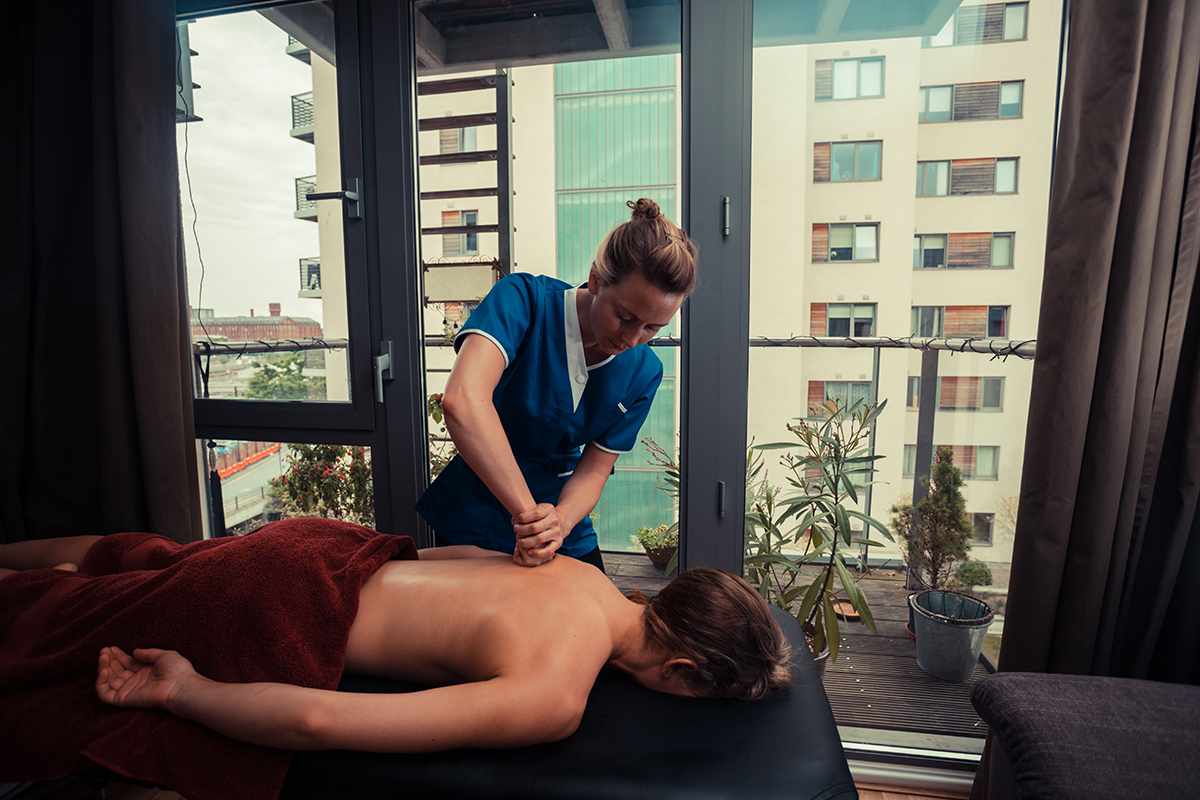
Both therapeutic modalities provide distinct physical, neurological, and logistical advantages. Comparing their depth of relaxation, session length, and pricing models helps you determine which option fits your immediate wellness routine.
Relaxation Depth and Stress Relief Capabilities
Table massage delivers deeper systemic relaxation, whereas chair massage provides rapid, focused stress reduction. Full-body table work induces deep sensory calm by quieting sympathetic arousal and soothing chronic musculoskeletal aches across all body segments.
Chair massage provides immediate, localized relief for acute postural strain. The upright, supported position invigorates circulation and relieves upper-body knots, making it ideal during the workday when mental alertness is required immediately following the session.
Time Commitment: Duration of Sessions
Table treatments require 60 to 120 minutes of actual treatment time, excluding 10 to 15 minutes for equipment setup and sanitization. This extended window allows thorough manipulation of multiple muscle layers, passive stretching, and whole-body nervous system recovery.
Seated sessions last 10, 15, 20, or 30 minutes, fitting easily into packed business schedules, lunch breaks, and corporate wellness hours. This efficiency enables consistent, weekly maintenance without claiming substantial personal time.
Cost Comparison of Home Service Options
Pricing reflects equipment requirements, hands-on time, and therapist deployment. Premier Chair Massage Service is billed at $140 per LMT per hour with a 2-hour minimum ($280), providing high cost-per-person efficiency for corporate events and private gatherings.
Individual in-home table services start at $155 for 60 minutes of Swedish massage, $170 for Prenatal, $175 for Deep Tissue, and $180 for Sports Massage, with Couples table sessions starting at $330. Rates include therapist travel across Manhattan, Brooklyn, Queens, and The Bronx, with a single $30 travel surcharge applied for Staten Island.
How to Choose Between Seated and Table Modalities
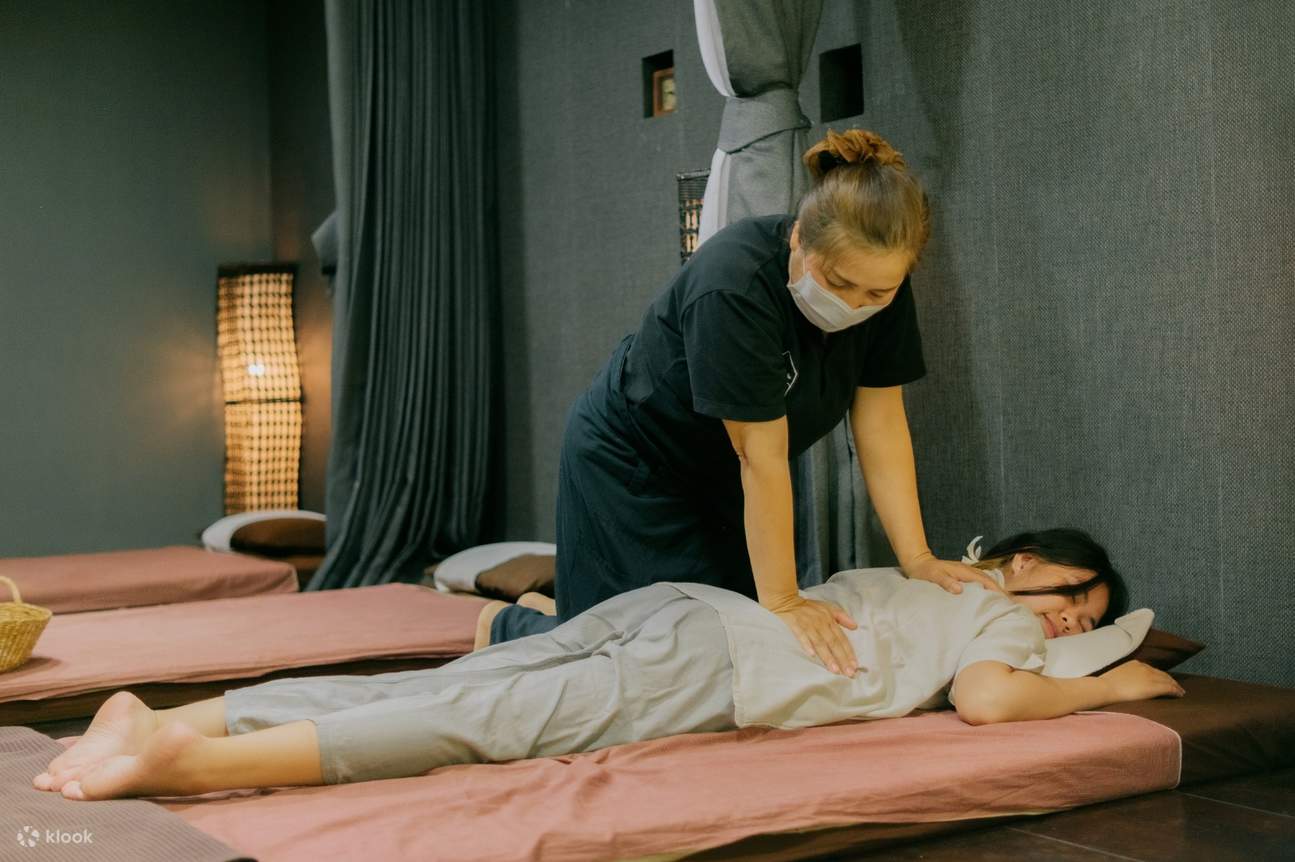
Selecting your ideal bodywork modality requires evaluating your recovery objectives, time availability, physical room space, and health history. Finding the best mobile massage nyc ensures professional guidance from licensed therapists who assess your individual needs.
When to Choose Table Treatments for Prenatal and Deep Tissue Needs
Table therapy is the superior choice for prenatal care and deep tissue work due to safety and access requirements.
Professional Prenatal Massage Service requires a specialized side-lying position on a massage table supported by specialized body pillows, available starting in the 13th week of pregnancy. This setup prevents pressure on the inferior vena cava and ensures maternal and fetal comfort.
Clinical deep tissue work demands substantial manual pressure and sustained myofascial friction. A horizontal treatment table provides the stable foundation necessary for therapists to work through dense muscle layers and break up deep adhesions safely.
When to Choose Seated Bodywork for Accessibility and Speed
Select seated therapy if you have limited time, restricted mobility, or prefer to remain fully clothed.
Seated massage offers high accessibility for clients who experience difficulty transitioning onto or off a low table. The forward-leaning chair position supports individuals with respiratory restrictions, spinal stiffness, or limited hip mobility.
Time-constrained professionals and busy parents benefit from the rapid delivery of chair bodywork. You receive targeted, tension-relieving therapy in as little as 15 minutes without undressing or scheduling downtime.
Considerations Regarding Post-Surgery or Specific Health Conditions
Consult a therapist to choose the safest positioning based on your specific recovery status and mobility restrictions.
Post-surgical recovery within 6 weeks requires written clearance from your attending physician. Seated massage frequently provides a safer positioning alternative when abdominal or sternal incisions prevent lying prone on a table.
Medical conditions including deep vein thrombosis (DVT), acute fever (at or above 38°C / 100.4°F), contagious skin conditions, or acute injuries within the past 72 hours represent total or local contraindications. HomeMassage therapists review a standard health intake before every session to confirm modality safety.
Experience Premium Home Services with HomeMassage
HomeMassage provides professional mobile table and chair bodywork delivered directly to your home, office, or hotel across all 5 New York City boroughs: Manhattan, Brooklyn, Queens, The Bronx, and Staten Island. Every session is conducted by a Licensed Massage Therapist (LMT) certified by the New York State Education Department (NYSED) carrying full professional liability insurance.
Operating daily from 07:00 to 21:00, our mobile practice delivers all necessary equipment, sanitized linens, and nut-free oils to your door from our dispatch center at 106 W 32nd St, New York, NY 10001. Call +1 (917) 426-9100 or schedule your session online at homemassagenyc.com.