Deep tissue therapy targeting deeper muscle layers can cause mild discomfort, but understanding the difference between therapeutic pressure and harmful pain ensures an effective treatment. HomeMassage brings New York State licensed massage therapists directly to your home, hotel, or office across New York City with our on-demand mobile massage NYC service.
Should a Deep Tissue Massage Be Painful?
Debunking the Myth of No Pain No Gain in Bodywork
A deep tissue massage does not need to be painful to deliver clinical results. Research published by the American Massage Therapy Association (AMTA) confirms that effective manual therapy relies on targeted compression, gradual fascial release, and controlled pressure rather than excessive force.
Productive bodywork operates strictly within your personal tolerance threshold. Severe pain triggers defensive muscle guarding, which causes motor units to contract reflexively and counteracts therapeutic release. Many clients evaluate deep tissue vs swedish modalities when deciding whether they need gentle circulatory relaxation or intensive fascial manipulation.
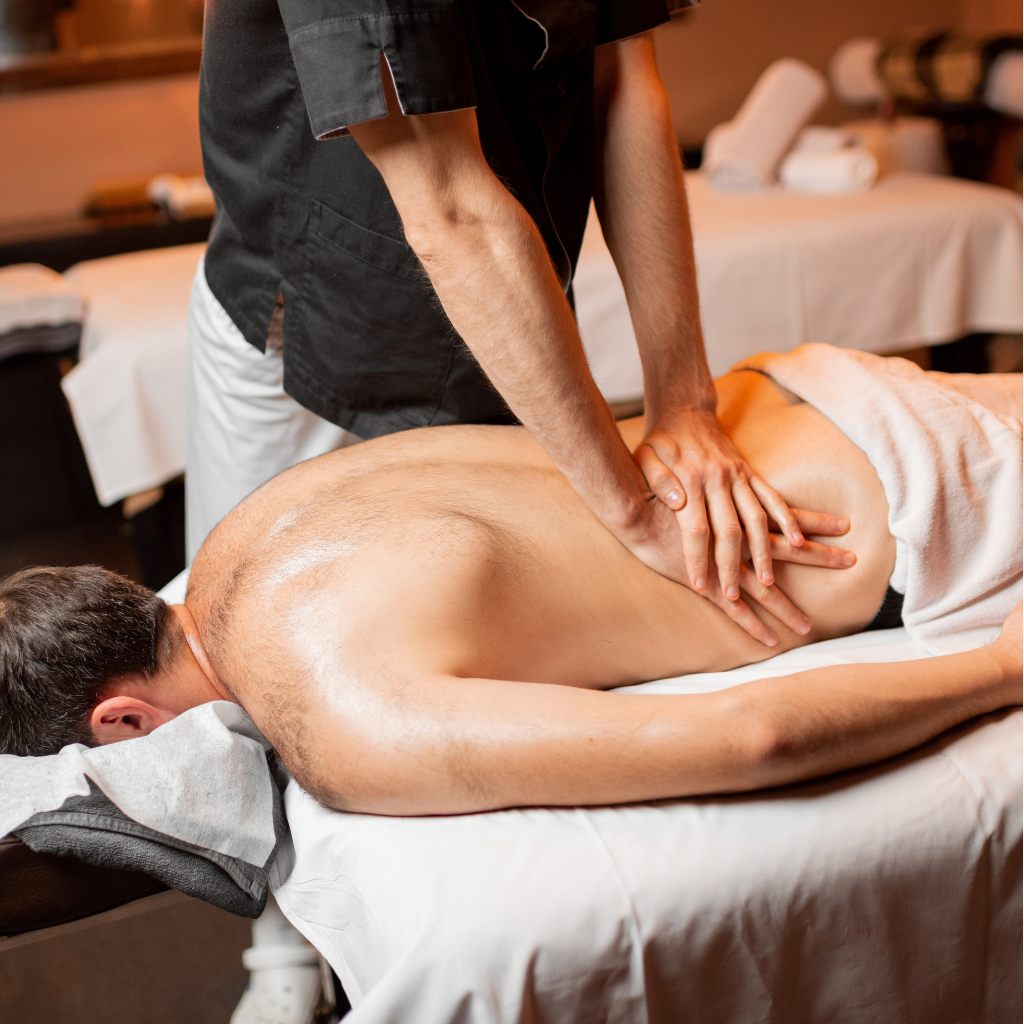
Distinguishing Between Good Discomfort vs. Bad Pain
Distinguishing between therapeutic discomfort and harmful pain protects your neuromuscular system from injury during bodywork.
Therapeutic discomfort presents with:
- Dull, aching sensations localized within tight muscle bands
- Gradual pressure release as stubborn muscle knots dissipate
- Tolerable tension often described as productive “good hurt” that brings physical relief
Harmful pain presents with:
- Sharp, stabbing, or radiating sensations along nerve pathways
- Physical distress that restricts natural, rhythmic breathing
- Defensive muscle guarding that forces adjacent muscle groups to tense up
Notify your therapist immediately if sensation shifts from a therapeutic ache to sharp distress when receiving a massage for knots.
Communicating Pressure Levels with Your HomeMassage Therapist
Clear communication ensures your practitioner calibrates manual pressure to match your physiological needs. HomeMassage utilizes a standardized 1 to 5 pressure scale, where Level 4 represents firm therapeutic pressure and Level 5 targets dense myofascial layers.
Our New York State licensed massage therapists check in periodically throughout your session to ensure depth remains therapeutic rather than destructive. Speak up promptly during your treatment if pressure sensations ever exceed your comfort range.
Common Causes of Soreness After a Deep Tissue Session
Breaking Down Muscle Adhesions as well as Scar Tissue
Deep tissue therapy causes post-session soreness primarily by mechanically breaking down dense muscle adhesions and restrictive scar tissue formations within deep fascial planes. Manual friction and myofascial stripping techniques disrupt rigid collagen cross-links, temporarily releasing cellular waste products into surrounding interstitial tissues. This approach functions effectively as a specialized massage for scar tissue to restore functional mobility, improve tissue pliability, and eliminate chronic stiffness.
This mechanical manipulation creates mild localized micro-trauma as the body initiates natural tissue repair pathways. The resulting soreness closely resembles delayed onset muscle soreness (DOMS) experienced after a rigorous resistance workout.

The Body’s Inflammatory Response to Deep Pressure
Targeted mechanical pressure stimulates localized vasodilation and accelerates systemic blood flow across treated muscle groups. Enhanced circulation delivers oxygenated red blood cells and reparative nutrients while speeding up lymphatic drainage of cellular metabolites.
Your body naturally releases endogenous endorphins and restorative anti-inflammatory cytokines during this process. This physiological healing cascade can generate temporary muscle sensitivity and localized tenderness lasting 24 to 48 hours.
Why You Might Feel Worse Before You Feel Better
Post-treatment soreness often feels pronounced initially as chronically shortened muscles adjust to restored structural alignment and enhanced blood flow. Muscle groups harboring postural tension for months require time to adapt to improved flexibility and neuromuscular reset.
Subsequent treatments typically produce significantly less post-session soreness as your myofascial tissues become more pliable and responsive to manual manipulation.
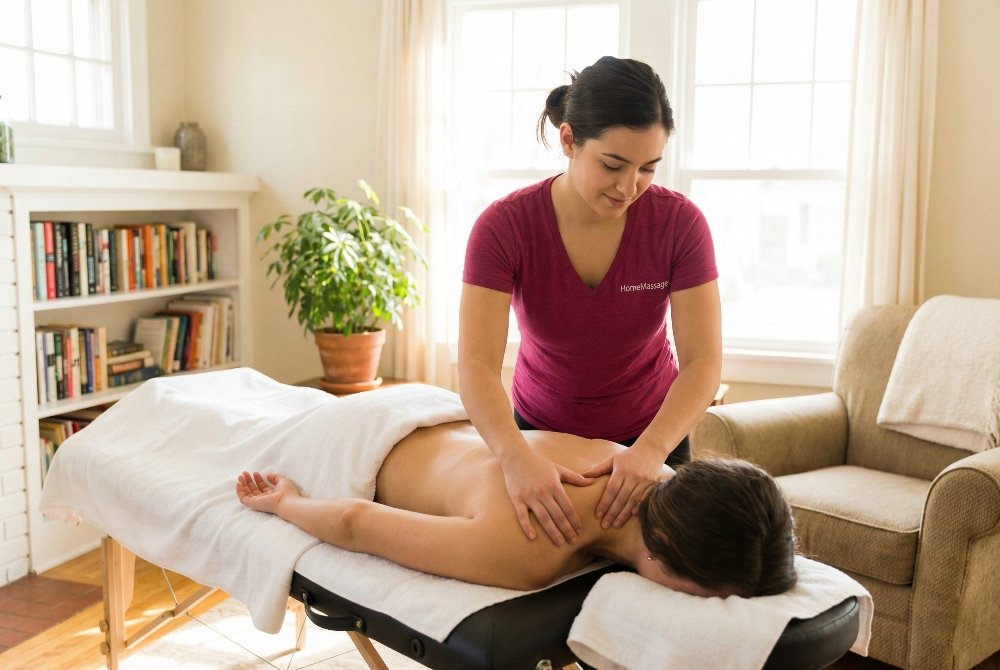
How to Relieve Muscle Soreness After Your HomeMassage Appointment
Importance of Hydration to Flush Metabolic Waste
Proper hydration accelerates muscular recovery by assisting your lymphatic system in eliminating metabolic byproducts from treated tissues. Drink 500 ml (17 fl oz) of water within 2 hours following your bodywork appointment.
Avoid alcohol, caffeinated beverages, and sugary drinks for 4 to 6 hours post-treatment because diuretics impede optimal tissue rehydration.
Using Heat Therapy plus Gentle Stretching for Recovery
Combining thermotherapy with light active stretching reduces muscle hypertonicity and relieves lingering post-massage soreness. Apply a warm compress or heating pad to sore areas for 15 to 20 minutes to enhance peripheral circulation and ease joint stiffness.
Perform gentle range-of-motion movements targeting treated muscle groups, including the trapezius, levator scapulae, and lower back extensors. Light movement prevents muscle fibers from tightening up and maintains newly gained flexibility.
When to Avoid Intense Exercise After Treatment
You should avoid high-intensity exercise for 24 hours following a deep tissue session. Heavy weightlifting, sprinting, and high-impact training place excess mechanical stress on already stimulated muscle fibers.
Engage in low-impact activities such as casual walking and light mobility drills if you wish to promote blood circulation without straining recovering muscle groups. Resume normal exercise intensity after the initial 24-hour recovery window.
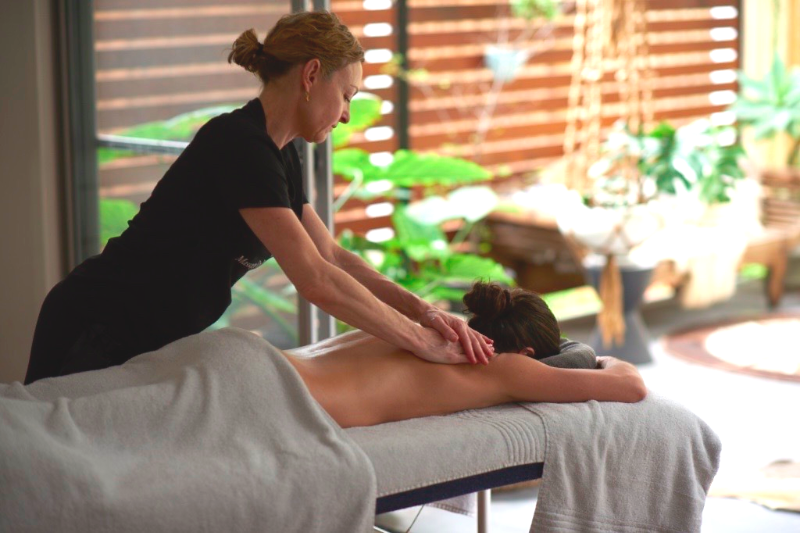
Is Deep Tissue Right for You? Comparing Therapeutic Approaches
Differences Between Swedish Modalities and Deep Tissue
The primary difference between Swedish massage and deep tissue therapy lies in stroke depth, pressure intensity, and clinical intent. Professional Swedish Massage Service utilizes long, gliding strokes (effleurage) and kneading (petrissage) at Level 2 to 3 pressure to enhance circulation and systemic relaxation.
In contrast, Premier Deep Tissue Massage Service applies sustained compression, trigger point work, and cross-fiber friction at Level 4 to 5 pressure. Choose Swedish massage for general stress reduction, and select deep tissue bodywork to treat chronic tension, repetitive strain, and localized postural pain.
When to Choose Sports Therapy or Prenatal Care Instead
Specialized bodywork modalities cater to specific athletic recovery cycles and pregnancy health requirements. Our Sports Massage Service combines active stretching, trigger point therapy, and PNF techniques to optimize athletic performance and reduce injury risk. Understanding the difference sports deep tissue modalities offer helps athletes schedule targeted pre-event priming or post-event recovery.
Our Professional Prenatal Massage Service adapts pressure to Levels 1 through 3 and utilizes dedicated side-lying cushioning for expectant mothers from week 13 onward. Expectant mothers receive gentle, specialized care that strictly avoids deep abdominal and inner ankle pressure.
Benefits of Chair Bodywork for Lighter Pressure Needs
Ergonomic chair bodywork provides accessible, upper-body tension relief without requiring oil application or clothing removal. Standard sessions last 10 to 20 minutes, concentrating specifically on the neck, shoulders, upper back, and forearms.
Our Premier Chair Massage Service utilizes portable ergonomic chairs weighing 9 kg (20 lb), making it suitable for corporate offices, events, and individuals who prefer lighter pressure over intensive manual manipulation.
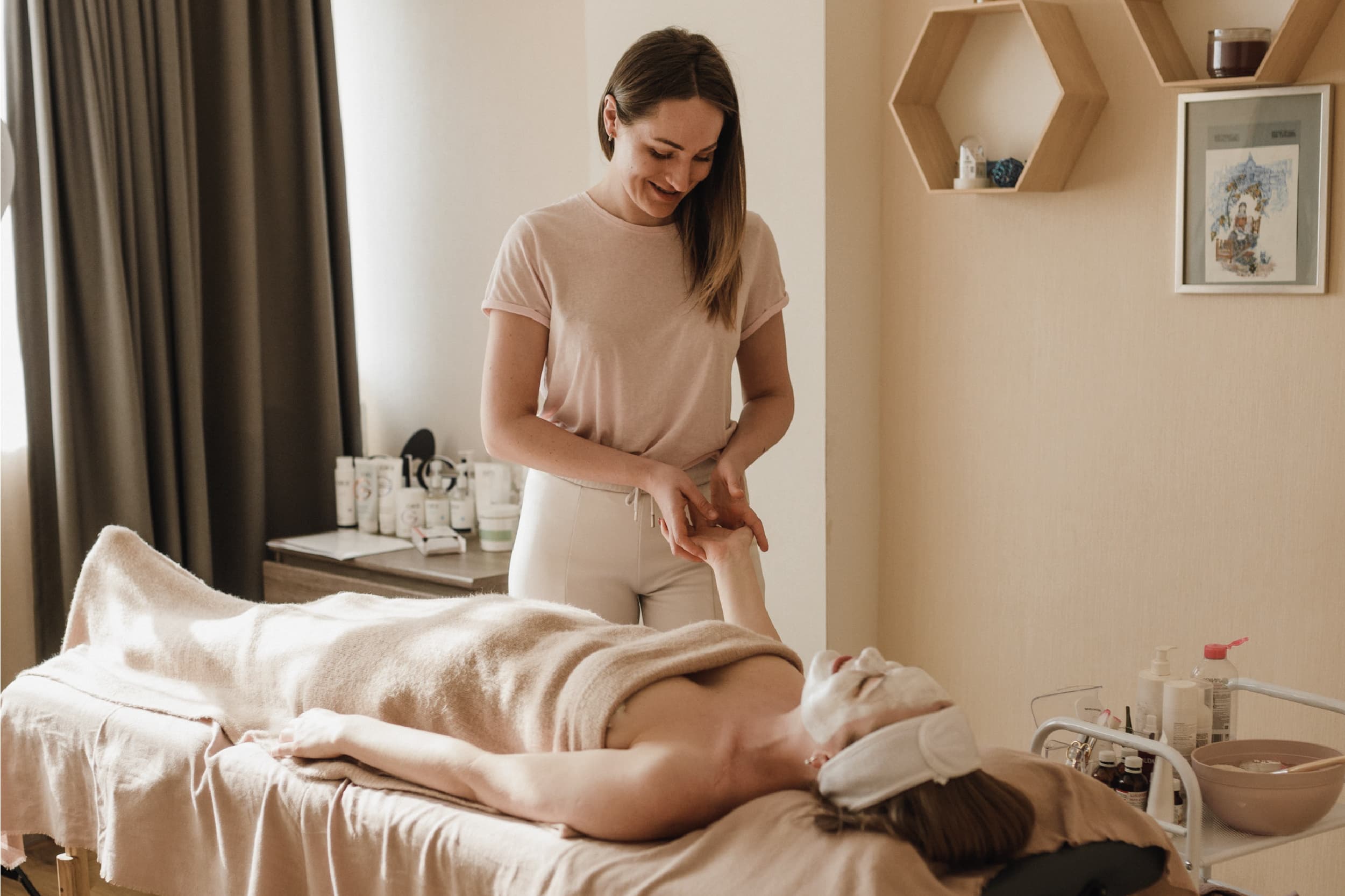
Experience Professional In-Home Bodywork in New York City with HomeMassage
HomeMassage is a 100% mobile massage service delivering licensed manual therapy directly to your home, apartment, hotel, or office across Manhattan, Brooklyn, Queens, The Bronx, and Staten Island. Every session is conducted by a New York State licensed massage therapist (LMT) holding professional liability insurance and vetted through strict practical evaluations. Our therapists arrive equipped with portable treatment tables, fresh linens laundered at 60°C (140°F), and unscented, nut-free massage oils. Our central dispatch and training facility is located at 106 W 32nd St, New York, NY 10001 (Midtown Manhattan, near Herald Square and Penn Station; dispatch only, not a walk-in clinic). We operate 07:00 – 21:00 daily, 7 days a week. If you are looking for the best in home deep tissue massage nyc, schedule your session with HomeMassage to experience tailored, restorative bodywork in the comfort of your private space.

FAQ: Understanding Deep Tissue Massage Pain
How long should soreness last after deep tissue massage?
Post-treatment muscle soreness typically lasts 24 to 48 hours. This temporary stiffness resembles mild post-workout fatigue and confirms that treated myofascial tissues are adapting and repairing. Contact your healthcare provider if acute pain persists beyond 72 hours or intensifies over time.
Can I request lighter pressure during my session?
Yes, you can request lighter pressure at any point during your session. Therapeutic effectiveness does not require enduring painful sensations. Inform your New York State licensed therapist immediately whenever pressure exceeds your comfort threshold, and they will adjust their technique to match your exact tolerance level.
What should I avoid after a deep tissue massage?
You should avoid high-intensity exercise, alcoholic beverages, and extremely hot baths for 24 hours after treatment. These activities can exacerbate localized inflammation and strain recovering muscle tissues. Focus instead on drinking 500 ml (17 fl oz) of water, performing gentle stretches, and resting for optimal recovery.